
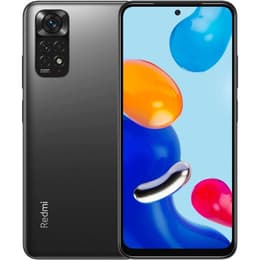


Google Pixel 9 vs Xiaomi Redmi Note 11

Google Pixel 9
Google Pixel 9
Från

Pris för rekonditionerad produkt:4 159,16 kr

Jämfört med nypris 12 179,69 kr

Se alternativ
Xiaomi Redmi Note 11
Från

Pris för rekonditionerad produkt:1 107,89 kr

Jämfört med nypris 2 749,89 kr

Se alternativ

Betyg

Google Pixel 9, released in August 2024, and Xiaomi Redmi Note 11, launched in January 2022, are Android smartphones from different generations and market segments. While both offer a full Android experience, the Pixel 9 focuses on advanced computational features and long-term software support, whereas the Redmi Note 11 was designed as a capable device for everyday tasks at its release. They operate on the Android platform, but with distinct approaches to software and hardware integration.

Poäng

Hållbarhet

The expected practical lifespan and software support differ significantly between these two devices, primarily due to their release timelines and manufacturer policies.

  • Software Support: The Google Pixel 9 benefits from an extensive software support policy, promising seven years of operating system and security updates from its August 2024 release, extending its usability until at least August 2031. In contrast, the Xiaomi Redmi Note 11, released in early 2022, reached its end-of-life for software updates in February 2025, meaning it no longer receives official Android or security patches.
  • Physical Durability: The Pixel 9 features Gorilla Glass Victus 2 for screen protection and boasts an IP68 rating, indicating high resistance to dust and water immersion. The Redmi Note 11 offers IP53 dust and splash resistance, providing protection against light splashes but not full submersion.
  • Expected Lifespan: Users prioritizing long-term security and access to the latest Android features will find the Pixel 9 offers a considerably longer practical lifespan. The Redmi Note 11, while physically durable for its class, has a shorter functional lifespan due to discontinued software support.

Lanseringsår

2024

2022

Kompatibel med senaste uppdatering

Ja

Nej

OS

Android

Android

Vikbar

Nej

Nej

Prestanda

Performance capabilities are a key differentiator, reflecting the technological advancements and design philosophies of each device.

  • Processing Power: The Google Pixel 9 is equipped with a current-generation Google Tensor G4 processor, designed for efficient handling of demanding applications, advanced AI features, and smooth multitasking. This translates to quick app loading, fluid navigation, and robust performance for gaming and intensive tasks. The Xiaomi Redmi Note 11 utilizes a Qualcomm Snapdragon 680 4G processor, which provides acceptable performance for daily activities, social media, and light gaming.
  • Multitasking and Storage: The Pixel 9 typically comes with 12GB of RAM, facilitating seamless transitions between numerous open applications. Storage options include 128GB and 256GB. The Redmi Note 11 is available with 4GB or 6GB of RAM and 64GB or 128GB of internal storage, which can be expanded via a microSD card.
  • Battery Behavior: The Pixel 9 houses a 4700 mAh battery, with user reports indicating it can comfortably last a full day with moderate to heavy usage. It supports 27W wired and 15W wireless charging. The Redmi Note 11 features a larger 5000 mAh battery, often providing over a day of use, even with active screen time, and supports 33W fast charging.

Minne (GB)

12 GB

4 GB

Skärmkvalitet

Both devices offer vibrant displays, but with differences in technology and capabilities that impact the viewing experience.

  • Display Technology and Clarity: The Google Pixel 9 features a 6.3-inch OLED display with a resolution of 1080x2424 pixels, delivering deep blacks and vibrant colors. The Xiaomi Redmi Note 11 comes with a 6.43-inch AMOLED display, offering a resolution of 1080x2400 pixels, also known for its rich colors and good contrast.
  • Brightness and Smoothness: The Pixel 9's screen can reach high brightness levels, with up to 1800 nits in High Brightness Mode (HBM) and a peak of 2700 nits, ensuring excellent visibility even in bright outdoor conditions. It also features an adaptive refresh rate up to 120Hz for smooth scrolling and responsive interactions. The Redmi Note 11 offers a maximum brightness of 700 nits (HBM) and a peak of 1000 nits, with a 90Hz refresh rate, providing a smooth visual experience for its class.
  • Viewing Experience: Users who prioritize a brighter display with a more fluid refresh rate for media consumption and gaming will find the Pixel 9's screen more advanced. The Redmi Note 11 still provides a good viewing experience for everyday use, especially considering its display technology.

Resolution

1080 x 2424

1080 x 2400

Skärmtyp

OLED

AMOLED

Audiovisuellt

Camera systems represent a significant area of divergence, with each phone catering to different photographic priorities.

  • Rear Camera System: The Google Pixel 9 features a dual-camera setup, including a 50MP main sensor with optical image stabilization (OIS) and a 48MP ultrawide lens with a 123-degree field of view, capable of macro focus. Its strength lies in advanced computational photography, offering features like Night Sight, Astrophotography, Portrait Mode, and Face Unblur for enhanced image quality across various conditions. The Xiaomi Redmi Note 11 is equipped with a quad-camera system: a 50MP main sensor, an 8MP ultrawide lens (118-degree FOV), a 2MP macro, and a 2MP depth sensor. Its performance is generally good in well-lit environments but shows limitations in low-light conditions.
  • Front Camera and Video: For selfies, the Pixel 9 has a 10.5MP front camera. It supports 4K video recording and includes features like Cinematic Blur and slo-mo. The Redmi Note 11 has a 13MP front camera. Video recording on the Redmi Note 11 is capped at 1080p at 30 frames per second, and it lacks advanced stabilization.
  • Overall Photography: Users seeking advanced photography capabilities, especially in challenging lighting and with intelligent processing, will find the Pixel 9's camera system more versatile. The Redmi Note 11 provides acceptable results for casual photography and social sharing.

Huvudkamera

50 megapixels

50 megapixels

Fram kamera

10.5 megapixels

13 megapixels

Övrigt

Beyond core performance, several practical elements contribute to the overall user experience and daily convenience.

  • Connectivity: The Google Pixel 9 supports 5G connectivity, along with newer Wi-Fi standards (Wi-Fi 6/7) and Bluetooth 5.3, ensuring faster data speeds and more reliable wireless connections. The Xiaomi Redmi Note 11 is a 4G-only device, featuring Wi-Fi 5 and Bluetooth 5.0.
  • Ports and Biometrics: Both devices utilize a USB-C port for charging and data transfer. The Redmi Note 11 also retains a 3.5mm headphone jack and includes an IR blaster for controlling home electronics. The Pixel 9 relies on face unlock and an under-display fingerprint sensor for security, while the Redmi Note 11 features a side-mounted fingerprint sensor.
  • Design and Handling: The Pixel 9 measures 152.8 x 72.0 x 8.5 mm and weighs 198g, featuring a premium build with Gorilla Glass Victus 2 on the back and an aluminum frame. The Redmi Note 11 has dimensions of 159.9 x 73.9 x 8.1 mm and weighs 179g, offering a comfortable in-hand feel with its design.

Vikt

198 g

179 g

Skärmstorlek (tum)

6.3

6.43

Operatörslås

5G

4G

SIM-kort

Fysiskt SIM + eSIM

Dubbla fysiska SIM

Operatörslås

Olåst

Olåst

The Google Pixel 9 and Xiaomi Redmi Note 11 cater to different user needs and expectations, largely influenced by their respective release dates and design philosophies. Users frequently praise the Pixel 9 for its exceptional camera performance, particularly its computational photography features that deliver consistent, high-quality images across various scenarios. Its long-term software support and robust performance for demanding tasks are also commonly highlighted as significant advantages. Some users, however, might find its design less unique compared to its Pro siblings.

The Redmi Note 11, on the other hand, is often commended for its impressive battery life, which can easily last more than a day, and its vibrant AMOLED display. Its inclusion of a 3.5mm headphone jack and expandable storage are also points of appreciation for many. Criticisms often revolve around its camera performance in low light and for video recording, as well as the discontinuation of software updates, which impacts its long-term viability.

Users prioritizing cutting-edge camera technology, extended software longevity, and powerful performance for a seamless and future-proof experience may prefer the Google Pixel 9. Its advanced AI capabilities and premium build are well-suited for those who rely heavily on their smartphone for photography, productivity, and staying updated with the latest features. Conversely, individuals seeking a reliable device for essential daily tasks, media consumption, and excellent battery endurance, without needing the absolute latest software or advanced camera features, might find the Xiaomi Redmi Note 11 a suitable option. For those considering either device, exploring quality-assured refurbished options can provide an eco-friendly alternative to extend the life cycle of these electronics.

Se alla artiklar

Våra senaste jämförelser